
Grammar with Gary #1
If there’s one thing in this world guaranteed to trigger a grammar geek like me it’s signs like these. At first glance, though, you might not see anything wrong, and as most people have no trouble following the direction on the sign (apart from those people with more than twelve items who want to cut the longer queues) does it really matter if it’s grammatically incorrect? Yes! But also no. And how do you know when to use less or fewer anyway? In this blog post I’ll explain the differences, how this particular rule of grammar came about, and if it’s really that important to observe it at all times.
When to use less / fewer
Let’s deal with the actual ‘rule’ first, because it’s fairly simple to understand. Basically, it relates to countable nouns (objects like the items in our example above):
- If the noun (cars, items, books) can be counted, use fewer
- If it’s a group noun (traffic, crowd), or can’t be counted, use less
Given that rule, you would therefore say ‘There are fewer cars on the road today’ or ‘There’s less traffic today’ but not ‘There’s fewer traffic today’. Here are some examples using fewer:
- There are fewer people at the shops than usual
- I drank fewer cups of coffee today compared to yesterday
- There are fewer books available at the library
And here are some examples using less:
- There’s less land on that farm
- As it was quiet, I did less work last week
- Please put less salt in the food
The same rule applies to using least and fewest:
- Least amount of land
- Fewest animals
- Least effort
- Fewest awards
Who came up with this rule?
The English language as we know it today has a long and rich history, from the original Celtic languages dating up to 450CE through the Roman/Anglo-Saxon/Scandinavian invasions circa 450-1450, to the Norman conquest, Renaissance and time of Shakespeare around 1450-1750. It was during the seventeenth and eighteenth centuries that the first grammarians and lexicographers appeared, and they attempted to formalise the language somewhat with their rulebooks and dictionaries.
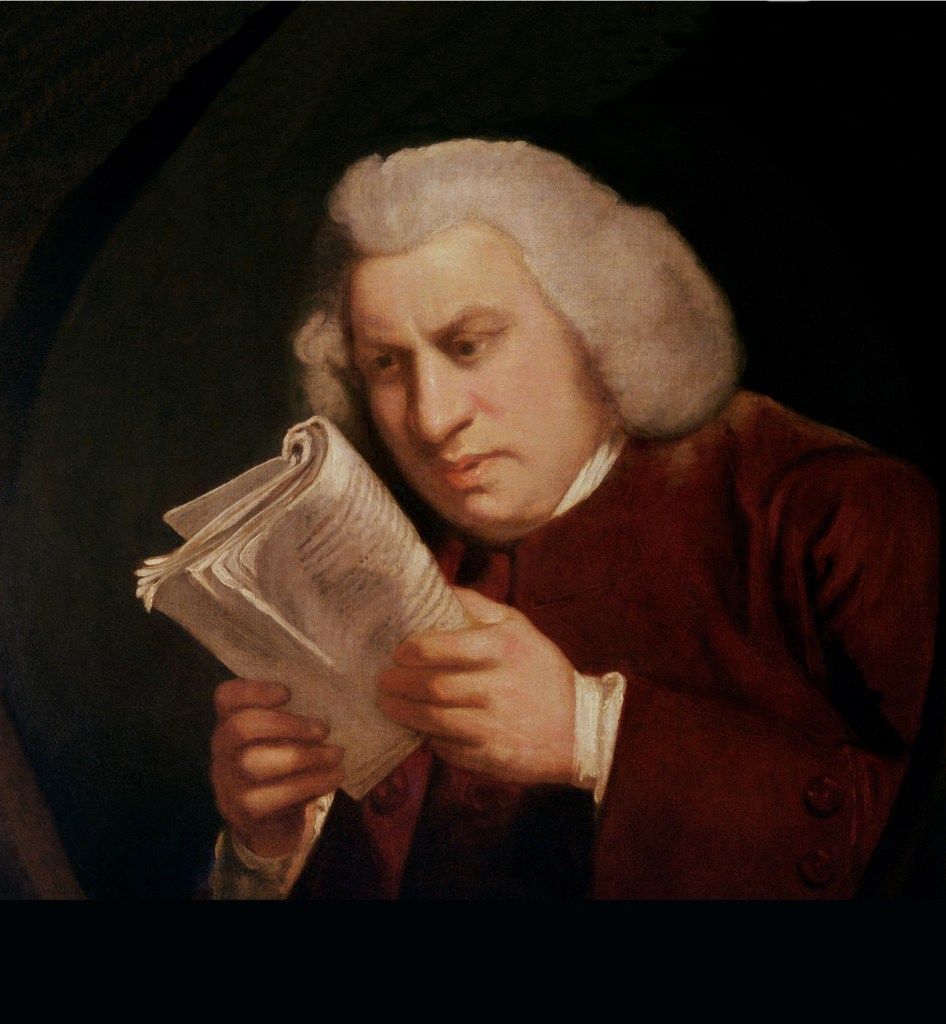
The primary focus of the grammarians was teaching students how to use language, with a strong focus on ‘correct’ usage, and they developed many of the rules that we still use today. (Lexicographers, like Samuel Johnson, were more interested in inventorying the English language.) According to Merriam Webster, the less/fewer rule was coined by the eighteenth-century grammarian Robert Baker, writing in Reflections on the English Language in 1770, though he did include some caveats to go with his rule: ‘It appears to me’ and ‘I should think’, so it seems he was only making a suggestion after all and it was later grammarians that codified his notion and firmly established it as a ‘rule’ of English grammar, enabling it to be taught to generations of students.
So is the rule really that important?
The sign at the top of the page can be understood perfectly well in its current form so you could argue that it doesn’t need changing, plus in some cases using less instead of fewer seems to be a better fit: ‘One fewer book’ feels a bit clunky compared to ‘One less book’. From a plain English point of view mixing up less and fewer doesn’t really cause any misunderstandings, and clearly they’ve been used in variation for a very long time, so why worry about it?
I’d argue that it depends on the context. In everyday usage, don’t worry about it: we all understand each other fine when we mix them up, although the grammar geek in your group might raise an eyebrow. In some other situations, however, like formal academic writing, it might be more prudent to adhere to the less/fewer rule in case the person doing the grading is a stickler for the rules. At the end of the day, you’re the one that’s best placed to judge when (or whether) to follow the rule or not, so decide for yourself whether the situation requires that extra level of formality or not. And who knows – given the way our language continues to evolve rapidly, one of them may drop out of common usage completely thus getting rid of the less/fewer conundrum altogether! Fingers crossed…
Thanks for reading, and see you next time!
 The Polished Page