Grammar with Gary #3
In today’s post I’ll be talking about the humble apostrophe, perhaps the most misplaced punctuation mark in the English language. I’ll examine the scenarios in which you would use an apostrophe, and how to avoid the pitfalls of placing it in the wrong place.
When to use an apostrophe
These are the main scenarios in which you would need to use an apostrophe:
- To show possession (Gary’s blog)
- To replace a letter or letters when using contractions (can’t; won’t)
- In certain expressions, such as those that mention time or money (two years’ worth)
When not to use an apostrophe
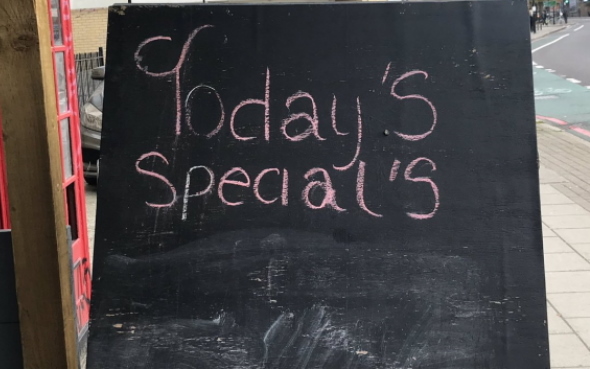
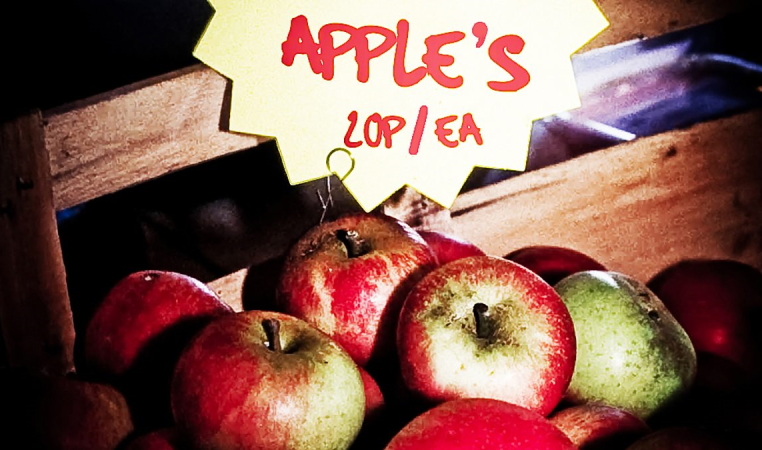
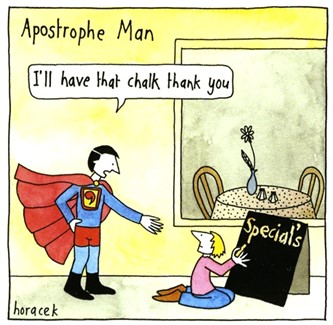
If your apostrophe use doesn’t fit into one of the above categories then there’s a good chance it’s wrong. One of the most common errors in apostrophe use is inserting one before the s at the end of certain words to try to make a plural; this is commonly known as the Greengrocer’s Apostrophe, because of its prevalence in shop signage. Here are a few examples:
- I like apple’s
- I prefer dog’s to cat’s
- Tattoo’s are great
Avoid this mistake at all costs! Well, maybe not at all costs, just be careful not to insert an apostrophe when one isn’t needed. Anyway, let’s move on to see how to correctly use apostrophes!
1. Using apostrophes to show possession
Adding an apostrophe with an s after a singular noun is the simple way to show possession:
- That is Gary’s car
- I’ll have a cup of builder’s tea
- The party was full of Dave’s friends
Nice and straightforward. But what about singular words that end in an s, like Charles or Paris? In these cases, the apostrophe (or the apostrophe + s) goes afterthe s:
- It is Charles’ birthday or It is Charles’s birthday
- Paris’ climate is lovely or Paris’s climate is lovely
Those are all singular examples, so what do you do with plural words, particularly those that end in an s? Simple: the apostrophe goes after the s:
- I avoided my parents’ mistakes
- Many countries’ governments have problems
- Editors’ fees are very affordable!
What about plurals that don’t end in an s? Treat them as a singular, and apply the apostrophe + s rule:
- Children’s television is pretty good these days
- The store has both men’s and women’s clothes
- His teeth’s cavities were a worry for the dentist
Remember: in all cases, the apostrophe that shows possession never appears inside the word itself.
2. Using apostrophes to replace letters in contractions
Apostrophes are also used to replace missing letters to reflect how most people talk in everyday language:
- Let’s go for a walk (let us)
- I can’t do weekends (cannot)
- It’s a nice day (it is)
These are known as contractions. It’s unusual to see this level of informality in academic or business writing, but some businesses make a conscious choice to write this way to present a friendly and welcoming image to their customers.
Most people generally use contractions correctly, although sometimes people misuse it’s and you’re – look out for a blog post on that subject in the future!
3. Apostophes in expressions that feature time
Temporal expressions, or expressions about time, also use apostrophes. These are quite simple to deal with if you follow these rules:
- For singular expressions of time (a day, a minute), use apostrophe + s
- For plural expressions of time (weeks, months), use apostrophe after the s
Here are a few examples of singular expressions:
- He’s yet to do a hard day’s work
- He received the equivalent of one month’s pay
- My car came with a year’s free AA cover
And some plural expressions:
- The credit card has six months’ interest-free transfers
- My employer required three months’ notice
- I have two years’ experience
A simple way to check if you need an apostrophe in a temporal expression is to use the word of and see how it sounds:
- One year of pay > One year’s pay)
- Three months of insurance > Three months’ insurance)

And there you have it! Now this is not an exhaustive list of every single scenario involving apostrophes, however these tips will cover almost every day-to-day situation in which you will need to use an apostrope in your writing. And if you’re still unsure then give me a shout – after all, that’s why I’m here!
Thanks for reading, and see you next time!
 The Polished Page
3 thoughts on “Apostrophes”