
Grammar with Gary #5
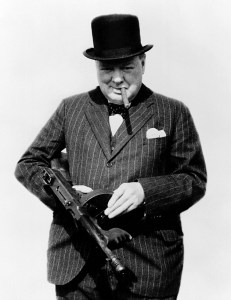
This week’s blog is all about prepositions, those tiny words like ‘of’, ‘from’ and ‘with’, and whether it’s acceptable to place them at the end of sentences (aka, stranding them). Let’s kick things off with this famous quote from Winston Churchill, in which he went to great lengths to avoid ending his sentence with a preposition:
“This is the sort of English up with which I will not put.”
Very wordy, isn’t it? Not to mention a bit clunky. It would have been far easier to just say “This is the sort of English I will not put up with.” But was Churchill grammatically correct in his words? And shouldn’t we all try to avoid ending sentences with prepositions? Let’s first look at what prepositions are, and then the ‘rules’ around how to use them.
What are prepositions?
Prepositions are linking words and are often used to connect nouns to other parts of the sentence – in other words, to show the relationship between the noun and another word in the sentence. Here are some ‘simple’ prepositions:
- Where are you going to?
- I’m sitting on a chair
- The match starts at 7:30
- The dog is under the table
Prepositions can also go with pronouns like her or our:
- The book is for her
- This is from me
- They’re with us
There are also ‘complex’ prepositions which are formed of two or more words:
- I couldn’t get to work due to the bad weather
- They’re waiting next to the train station
Prepositions are words that we use all the time, and we generally don’t give them a second thought (unlike Churchill) because they are a basic part of language that we all learn early on and instinctively know how to use . So why was Churchill so upset about people ending sentences with prepositions? And is there a ‘rule’ about this anyway?
To strand or not to strand (your prepositions)
John Dryden, an English poet and playwright, was apparently the first person to state that sentences shouldn’t end in prepositions. Dryden was a Latinist, and would frequently translate his writing into Latin to check if it was concise and elegant before translating it back into English. Dryden would apply the grammatical rules from Latin to this re-translation, and as Latin does not include sentences ending with prepositions a ‘rule’ to enforce this way of writing was thus born. This rule was adopted by other writers working around the same time period (the late 1600s) and it seems to have stuck around since then. But do we really need to apply this rule to modern written English?
Here are some ‘everyday’ examples that use stranded prepositions:
- Who are you waiting for?
- Where’s the new teacher from?
- I was given some books to look at
And here are the ‘non-stranded’ versions of those same phrases:
- For whom are you waiting?
- From where is the new teacher?
- I was given some books at which to look
Is there any difference in how we understand the first set compared to the second? Absolutely not! In fact, the second set of phrases may be harder to follow because they sound so formal, and people rarely talk that way.
So should you leave prepositions stranded or not? As we’ve seen above, whether or not the preposition is in Dryden’s preferred position or is left at the end of the sentence is largely irrelevant to our understanding of that sentence. There might be some cases where you want to write in a more formal manner (e.g. academia or journals) and avoid stranding your prepositions, but generally this is one rule that we don’t need to worry about.

Thanks for reading, and see you next time!
 The Polished Page