Grammar with Gary #7
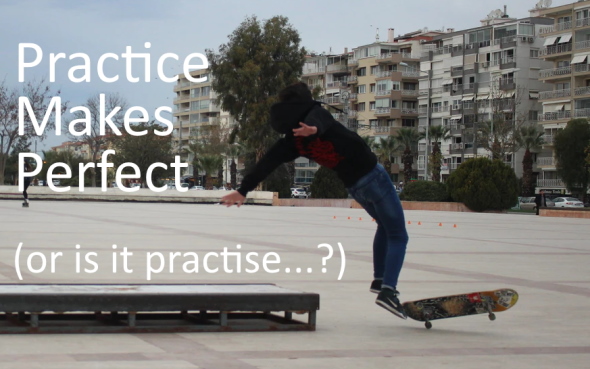
For today’s blog I’m going to explain the difference between practice and practise and how to correctly use each one in your writing. Didn’t know there was a difference? Read on to find out more!
The first thing you might think when you look at the two words is that it’s yet another case of UK vs US spelling, like you get with words like organise/organize or realise/realize. But that’s not the case here, as practice and practise both function differently here in the UK (in the US, practice is generally used all the time, so if you’re American you don’t need to worry about the difference).

For those of us in the UK, here’s the difference between the two:
- Practice is noun, or a ‘naming’ word
- Practise is a verb, or a ‘doing’ word
And here’s how you would use each in a sentence:
- I have to go to football practice (noun)
- My GP opened a new practice (noun)
- I must practise my football skills (verb)
- I used the computer so I could practise my typing skills (verb)
While the rules are fairly straightforward, it can still be easy to get the words mixed up in a sentence, either as a writer or as a proofreader, so let’s look at some simple ways to check the right word has been used.

Have I used the right word?
Let’s first look at practice. An easy way to see if this is correct for the sentence is to substitute in a similar noun like lesson, habit, training or preparation:
- I have to go to football practice > I have to go to (a) football lesson
- You need more practice to get better > You need more training to get better
- It’s my practice to proofread emails > It’s my habit to proofread emails
A fun way to remember is that practice contains the word ‘ice’ which is itself a noun!
Can we do a similar thing with the verb practise? Absolutely! But as we are now talking about a verb we would need to swap in another verb, like to prepare, to do, or to train:
- I need to practise more > I need to prepare more
- They practise on the football field > They train on the football field
- She’s been practising medicine for a long time > She’s been doing medicine for a long time
Another simple way is to look out for the verb endings –ing and –ed, as you shouldn’t see them with practice:
- They were practising all night
- I practised for two hours

So there you have it! No longer should you be confused over your GP opening a new practice where the the doctors practise medicine and later go to choir practice to practise their singing. Phew.
Do you think at some point one of the two (probably practise) will disappear and we’ll only use practice, as in the US?
Let me know in the comments!
 The Polished Page